
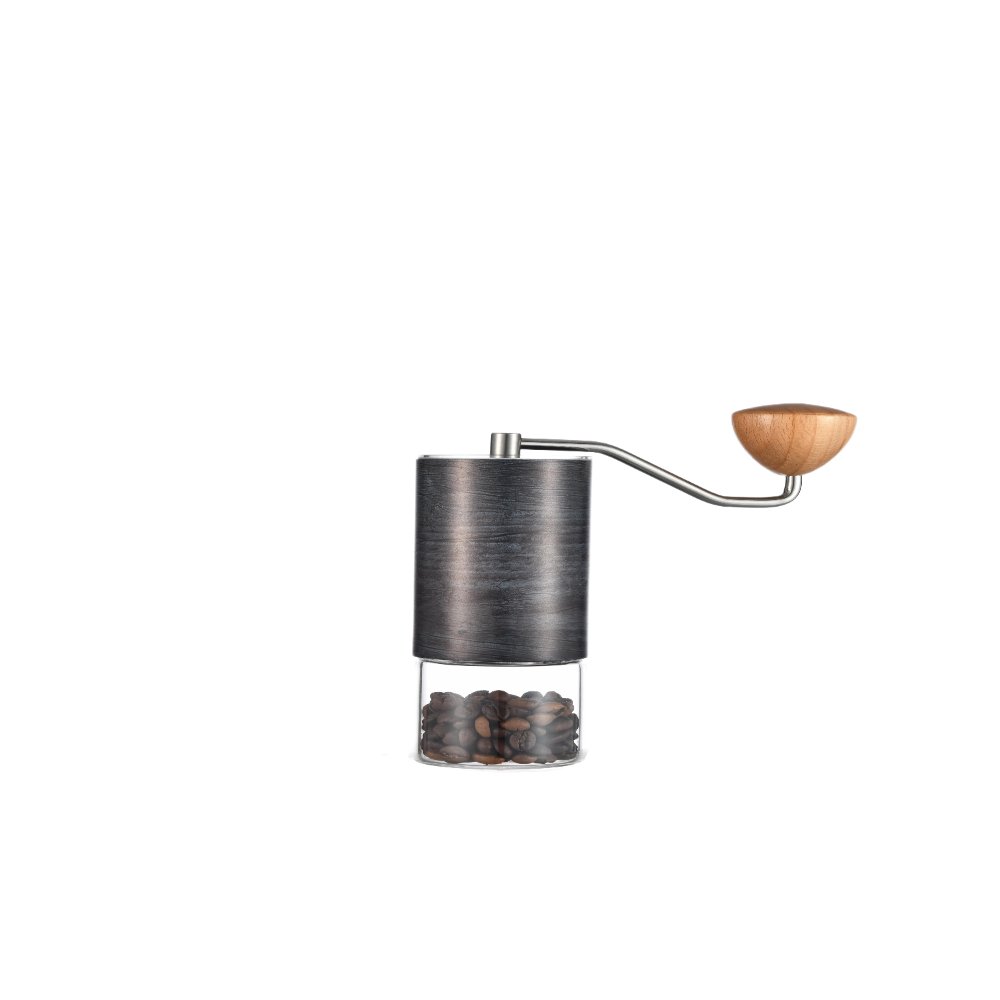
To approve a grinder sample identity, connect the exact model name, product URL and selected catalogue photograph to the supplier’s offered sample reference. Keep G1, G1-1 and G2-P Gray on separate rows, even when their photographs share a crank and cylindrical form. Ask the supplier to identify any offered variation explicitly. The resulting register records which version the buyer is considering; it does not establish grinding performance, material test results or a complete supply specification.
Preserve the model name as it appears on the page
The G1-1 listing uses the style name Self-contained Cylinder Style and the appearance entry Customizable Pattern. Those words belong to that particular catalogue reference. They do not identify an approved custom design, a delivered sample or a confirmed production option. Ask the supplier to state the exact appearance it proposes for the enquiry.
The saved G1 page instead gives Classic Straight Cylinder Style and Original Stainless Steel Color. G2-P Gray uses Curved Style and Gray. Keep those distinctions visible in an enquiry for wholesale coffee bean grinders. Shortening all three references to a generic cylinder grinder could make an otherwise clear sample discussion ambiguous.
Create a reference register before approving an alternative
Record the buyer’s selected reference and the supplier’s offered version in different columns. If the supplier returns the same model and appearance, it can say so explicitly. If it proposes a changed colour, model or pattern, give that alternative its own identifier. Do not replace the original requested reference before the buyer has reviewed the difference.
The following form is a proposed procurement record. It does not report samples already received or inspected. Use a dated supplier response to connect each proposed sample to its correct row.
Register field
Requested reference
Returned evidence
Model identity
Exact G1, G1-1 or G2-P Gray name
Supplier-confirmed offered model and revision
Product link
Individual catalogue PDP
Confirm the same reference or identify a replacement
Appearance
Selected named style and image
Identified sample photographs and offered appearance
Sample identifier
Buyer enquiry reference
Supplier’s unique sample or version reference
Change status
Original request retained
Same as requested or a described alternative
Approval scope
Identity and visible appearance
Record accepted, queried and unobserved items separately
Use images to identify, not silently substitute
The G1 image shows a straight metallic-looking upper cylinder and a transparent-looking lower area. It is a separate model reference from the darker straight cylinder shown for G1-1. Both should remain labelled when images are copied into an email or sample request. A shared outline does not make the photographs interchangeable.
Keep the original image URL or saved reference with its model row. When the supplier sends a new sample photograph, ask it to identify the model and the relevant enquiry. Record whether it matches the requested appearance or represents an offered alternative. The catalogue image is not itself evidence that a physical sample has been dispatched or accepted.
Clarify the meaning of a named pattern or colour
Customizable Pattern on the G1-1 page is a reason to ask a precise question, not a specification for a particular artwork file. Ask which pattern or appearance is being offered, what reference the supplier needs from the buyer, and which proof will be returned for review. This guide does not promise a custom option, a charge or an order quantity.
For G1 and G2-P Gray, retain the actual listed appearance names alongside any supplier colour identifier. Ask about differences instead of treating a screen rendering as a physical colour standard. If a buyer later requires a sample approval under agreed viewing conditions, keep that approval and its conditions with the identified sample version.
Record visible differences without making technical claims
The official G2-P Gray reference has a curved outer form and a dark lower section. It helps distinguish that pictured version from the two straight-cylinder references. It does not establish dimensions, capacity, coating chemistry, electrical specification or compatibility with another model’s parts.
Describe an observation at the level supported by the image. For example, a record can identify a curved outer form while leaving the exact dimensional drawing open. Avoid turning a visible crank into a statement about the complete operating mechanism or performance. Request technical information through its own model-specific supplier documents.
Return an approval that keeps open items visible
A useful response distinguishes accepted identity, a queried change and anything not observed. If a buyer accepts a model’s visible appearance, that decision should not automatically approve its component materials, supplied parts, packing or performance. Keep those procurement questions in their own records while using the same sample identifier to connect them.
An enquiry can say: “Please confirm which sample version corresponds to each linked grinder model and image. Retain the originally requested reference and list any proposed alternative separately. Identify the offered colour or pattern and attach labelled sample views. Please state what this evidence shows and which requested details still need confirmation.”
Send that register through Huaying’s contact page. The supplier’s blog gives broader grinder-selection context, while this document prevents model and sample identities from being merged. No sample dispatch, customization acceptance, certification, availability, price, minimum quantity or performance result is claimed here.
• Keep each exact model and catalogue image together.
• Retain original requests when reviewing alternatives.
• Give every returned sample or proof a specific version reference.
• Limit approval to the features actually identified and observed.
Frequently asked questions
Can the three models share one sample approval row?
Keep separate model rows. Shared general features do not establish that one physical sample or offered version represents all three references.
Does Customizable Pattern mean a particular design has been accepted?
It is catalogue wording. Ask which appearance is offered and what supplier proof and buyer decision are still required.
Can a catalogue image prove that a sample has been supplied?
It identifies an appearance reference. Physical sample dispatch, receipt and acceptance require their own identified records.
What if the supplier proposes a different model?
Keep the original reference and add the offered alternative with its own model, image and sample identifier. Record the buyer’s decision explicitly.
Product and contact references
https://hykitchenware.com/product/g1-1/
https://hykitchenware.com/contact/
https://hykitchenware.com/blog/